The term psychopath often conjures up images of criminal masterminds, serial killers, or villains in psychological thrillers. But in reality, psychopathy is far more complex and varied than most people realise.
Modern psychology doesn’t consider all psychopaths as violent or dangerous. Instead, researchers describe psychopathy as a personality pattern characterised by traits such as low empathy, manipulation, impulsivity, and a need for stimulation.
Psychopathy exists on a spectrum. So not everyone with psychopathic traits looks or behaves the same. Over decades of research, psychologists have identified different types of psychopaths that explain this diversity.
To aid your understanding, here’s some commonly discussed psychopath subtypes, based on research models…
Please Watch The Following Short Video To Aid Your Understanding…
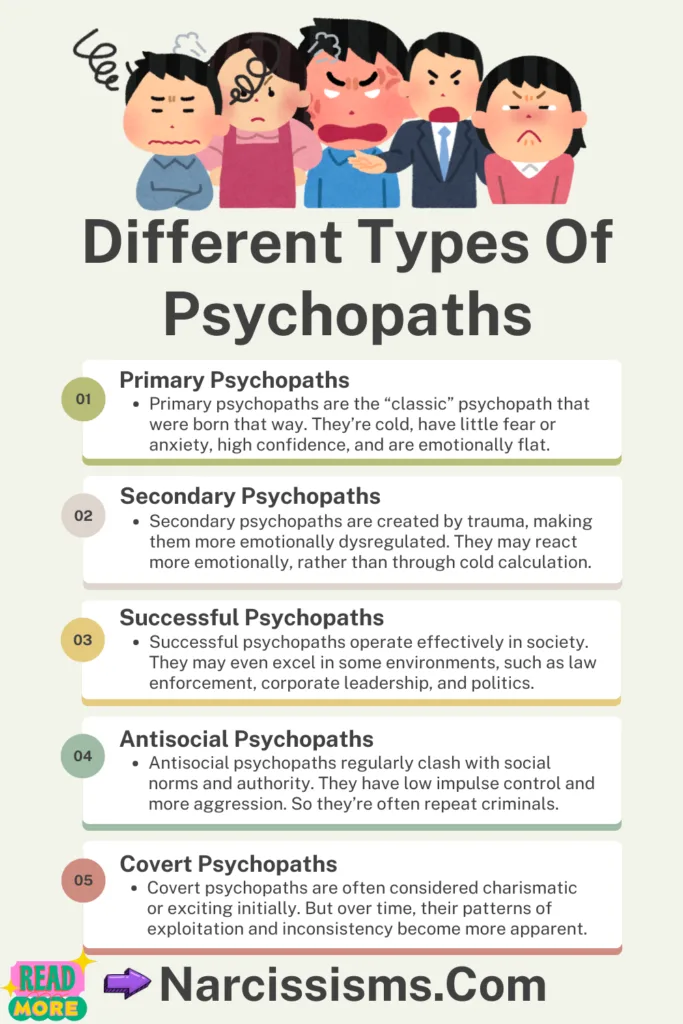
Primary Psychopaths
Primary psychopaths are considered the “classic” psychopath. They tend to show…
- Low emotional reactivity
- Flat emotional expressions
- High self-confidence
- A lack of anxiety or fear
According to theory, their traits may have a strong biological basis, meaning they feel emotions differently from most people. Primary psychopaths are often described as charming, cool-headed, and can stay calm under pressure to mask manipulations.
Primary psychopathy is strongly associated with traits such as superficial charm, lack of guilt, and exploitation of others.
Please CLICK HERE For Why Some People Love Serial Killers
Secondary Psychopaths
Secondary psychopaths share some traits with primary psychopaths, such as impulsivity and rule-breaking. But are thought to be shaped more by environmental factors, like trauma or an unstable upbringing.
Secondary psychopaths often exhibit…
- Higher emotional reactivity
- Impulsiveness
- Aggression driven by frustration or threat
- Greater anxiety than primary psychopaths
Secondary psychopathy overlaps with what some researchers view as “coping adaptation gone wrong”. Instead of emotional detachment, there’s emotional dysregulation.
Secondary psychopaths may take dangerous risks or lash out due to heightened emotions. Rather than through cold calculation.
“Successful” Psychopaths
Not all psychopaths fit the stereotype of criminals or violent offenders. “Successful”, or “high-functioning psychopaths”, operate effectively in society. And may even excel in some environments.
These individuals may display…
- High social intelligence
- Strategic thinking
- Boldness and fearlessness
- Low empathy paired with calculated self-control
Research suggests they may be overrepresented in high pressure occupations, such as corporate leadership, law, finance, and politics. While they may manipulate or exploit others, they often avoid legal trouble, and maintain a socially acceptable façade.
“Unsocialised” Or Antisocial Psychopaths
At the opposite end of the spectrum are psychopaths, who regularly clash with social norms and authority. This type of psychopath is more associated with…
- Chronic rule-breaking
- Criminal behaviour
- Low impulse control
- Aggression and hostility
Antisocial psychopaths may struggle maintaining relationships or employment. And they often get entangled in the criminal justice system. Their psychopathic traits are combined with a lack of social integration, which creates a pattern of antisocial behaviour.
Please CLICK HERE To Learn About High And Low Functioning Narcissists
“Covert” Or Subclinical Psychopaths
Some people score high in psychopathic traits, without outwardly obvious signs. They’re sometimes referred to as “covert”, “subclinical”, or “everyday psychopaths”. These covert psychopaths may not engage in criminal behaviour, but they still demonstrate…
- Emotional shallowness
- Manipulation in relationships
- Self-centeredness
- Strategic charm masking self-interest
Covert psychopaths are often considered charismatic or exciting initially. But over time, their patterns of exploitation or inconsistency become more apparent. Especially in intimate or workplace relationships. They just take longer to work out, due to their covert ways.
Please CLICK HERE For A Explanation Of All 10 Different Personality Disorders
The Bold–Disinhibited–Meanness Model (Triarchic Model)
Instead of types, some psychologists prefer using the “triarchic model”. These are3 core traits that combine differently in each individual. They are…
Boldness
Social dominance, fearlessness, emotional resiliency.
Disinhibition
Impulsivity, poor emotional control, lack of planning.
Meanness
Callousness, lack of empathy, cruelty, exploitation.
A person high in boldness but low in meanness may seem fearless and assertive. While someone high in meanness and disinhibition, but low in boldness, may present as volatile and aggressive.
This model shows the diversity of psychopathic behaviour across different contexts.
Final Thoughts
Not everyone with psychopathic traits is dangerous or violent. Some channel their traits of confidence, low fear, and focus under pressure, into socially productive roles. Such as surgeons, military, and law enforcement.
Others, especially those with a combination of impulsivity and aggression, may experience serious difficulties. And may spend most of their lives behind bars, or in trouble with the law.
Please CLICK HERE For The Different Types Of Narcissists