This blog obviously focusses on narcissists. But I also mention other cluster B personalty disorders, such as borderline, histrionic, and anti social personality disorders. That’s because they’re all cluster B personality disorders, so they’re very similar to NPD. But there’s also several more personality disorders that are worth knowing about.
These are cluster A and cluster C personality disorders. They’re worth being aware of, because it’s common for people with one personality disorder to have traits of other personality disorders, from different clusters. So this can further your understanding of certain people.
A quick reminder of clusters A, B, and C personality disorders is the phrase “Mad, Bad, and Sad.
Cluster A – Mad
Cluster B – Bad
Cluster C – Sad
Obviously this is massively simplified, but it helps with recalling them. Here’s the cluster A, B, C personality disorders in more detail…
Cluster A – Odd Or Eccentric Personality Disorders
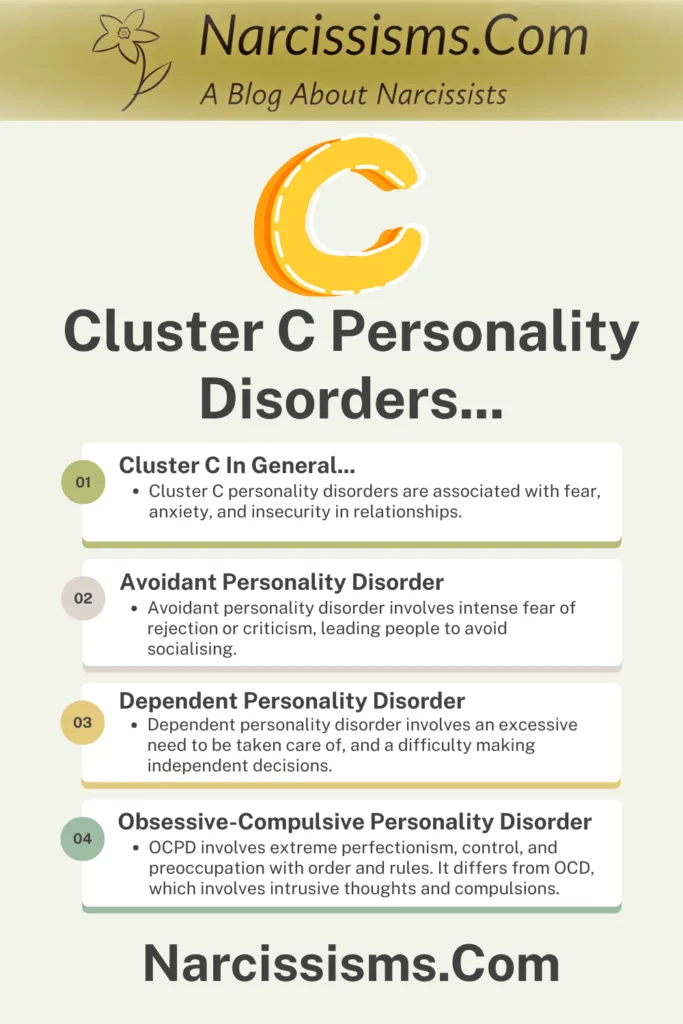
Cluster A personality disorders often involve unusual thinking patterns, social withdrawal, and pathological distrust.
Paranoid Personality Disorder
People with paranoid personality disorder are usually suspicious of other peoples’ motives. They may believe people are trying to deceive, harm, or exploit them. Despite no evidence to back this up.
Example
James works in an office and often believes his co-workers are secretly trying to sabotage him. If two colleagues are whispering, he assumes they’re plotting against him. Because of his constant suspicion, James rarely trusts anyone. So he keeps his distance from co-workers.
Schizoid Personality Disorder
Schizoid personality disorder involves emotional detachment with a strong preference to be alone. People with schizoid personality disorder often appear distant or disinterested in building relationships.
Example
Emma prefers spending her time alone reading, gaming, or watching documentaries. She rarely feels like attending social gatherings. So when colleagues invite her out after work, she politely declines. She doesn’t feel lonely. She just finds social interaction draining and unnecessary.
Schizotypal Personality Disorder
Schizotypal personality disorder includes eccentric behaviour, unusual beliefs, and social anxiety. People may appear odd or have “magical thinking.” It shares some features with Schizophrenia, but usually less severe.
Example
Oliver believes he can sense energy fields around people, and often interprets everyday events as meaningful “signs.” His speech can be unusual, and his dress sense is eccentric. So he struggles maintaining close friendships, because people find him strange.
Cluster B – Dramatic, Emotional, Or Erratic Personality Disorders
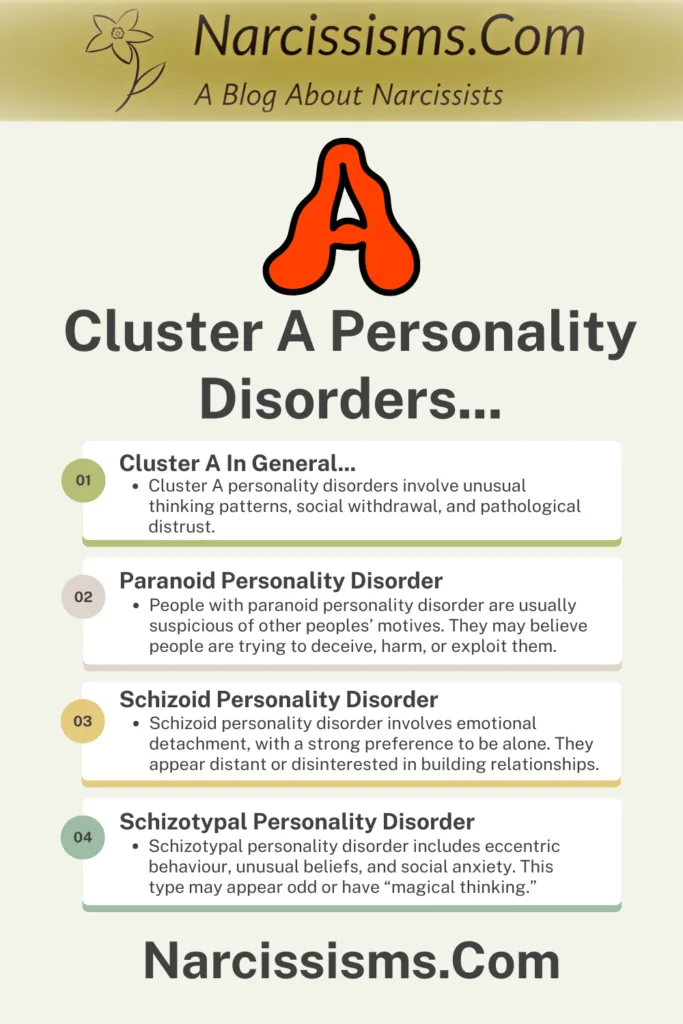
Cluster B personality disorders often involve intense emotions, impulsive behaviour, and unstable relationships.
Antisocial Personality Disorder
Antisocial personality disorder involves patterns of disregarding other peoples’ rights. People with ASPD may manipulate, deceive, or break rules without feeling guilt or remorse. They often feel that normal rules don’t apply to them.
Example
Liam often lies to friends and family to get what he wants. He may borrow money with no intention of paying it back. Then shows little concern if his actions hurt others. When confronted, Liam often blames other people.
Antisocial personality disorder is what many people refer to as psychopaths. But not all psychopaths are the same. Check out the following link for more on the different types of psychopaths…
Please CLICK HERE For The Different Types Of Psychopaths
Borderline Personality Disorder
Borderline personality disorder is characterised by emotional instability, fear of abandonment, and chaotic relationships.
Example
Sophia feels close to her friend one day, but hurt and angry the next, because she believes she’s being ignored. If a friend doesn’t quickly respond to her messages, she worries that they don’t care. So her emotions rapidly change, and can feel overwhelming.
Therapies such as Dialectical Behaviour Therapy are commonly used to help people manage these intense emotional swings.
Histrionic Personality Disorder
People with histrionic personality disorder want almost constant attention, and may express emotions in dramatic and theatrical ways.
Example
Ava likes being the centre of attention at social gatherings. So she tells exaggerated stories, and behaves dramatically to keep people focused on her. When attention shifts to someone else, she feels uncomfortable and upset. So she gets louder, and more animated. Sometimes she even causes a scene to get eyes back on her.
Narcissistic Personality Disorder
Narcissistic personality disorder involves a strong sense of self-importance, a need for attention and admiration, and a difficulty empathising with others.
Example
Daniel often boasts about his achievements, and expects special treatment at work. But when he’s criticised, he reacts defensively or angrily. Even if it’s helpful constructive criticism. Daniel appears confident, but is deeply hurt if he feels under appreciated.
Please CLICK HERE For The Different Types Of Narcissists
Cluster C – Anxious Or Fearful Personality Disorders
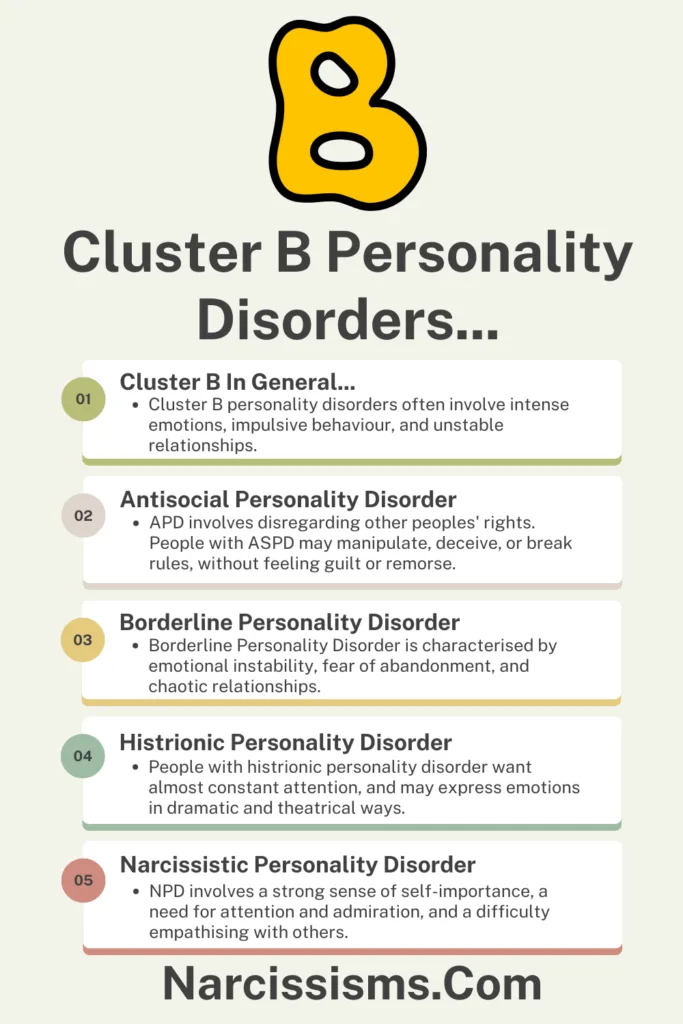
Cluster C personality disorders are associated with fear, anxiety, and insecurity in relationships.
Avoidant Personality Disorder
Avoidant personality disorder involves intense fear of rejection or criticism, leading people to avoid socialising.
Example
Maya wants close friends, but she worries others will judge her or think she’s awkward. Because of this fear, she declines invitations and avoids meeting new people. Even though she wishes she could connect more easily.
Dependent Personality Disorder
Dependent personality disorder involves an excessive need to be taken care of, and difficulty making independent decisions.
Example
Ethan often asks others to make decisions for him. Even small ones like choosing meals, or planning his day. He fears being alone, so he may stay in unhealthy relationships through worry he can’t survive independently.
Obsessive-Compulsive Personality Disorder
Obsessive-compulsive personality disorder (OCPD) involves extreme perfectionism, control, and preoccupation with order and rules. It differs from Obsessive-Compulsive Disorder, which involves intrusive thoughts and compulsions.
Example
Charlotte spends hours organising spreadsheets and checking tiny details at work. She struggles delegating tasks, because she believes others won’t meet her high standards. As a result, projects take far longer than necessary.
Please CLICK HERE For The Different Types Of Psychopaths