Narcissistic behaviour can be confusing, hurtful and difficult to make sense of. Particularly when you’re dealing with someone who seems to twist everything around, or make you question your own reality.
Understanding the terminology associated with narcissism can help you recognise unhealthy patterns, make sense of your experiences, and understand the tactics used to manipulate and control others.
I’ve created these visual explainers to break down the most common narcissistic behaviours, manipulation techniques, and psychological effects of narcissistic abuse. Each graphic provides a simple introduction to a particular concept, along with a written explanation, and links to more detailed articles.
Whether you’re trying to understand a narcissist in your own life, supporting someone who has experienced narcissistic abuse, or simply learning more about narcissism, I hope you find these resources helpful.
Help Others Understand Narcissism
If you find these explainers useful, please feel free to share them on social media or send them to someone who might benefit from understanding narcissistic behaviour.
If you run a blog, website or support resource, you’re welcome to link to this page as a useful reference for your readers. The more people who understand narcissistic manipulation and its effects, the easier it is for those affected to recognise what they’re experiencing and find the support they need.
Knowledge can be an important first step towards understanding, recovery and rebuilding your confidence.
Blame Shifting
What Is Blame Shifting In Narcissistic Relationships?
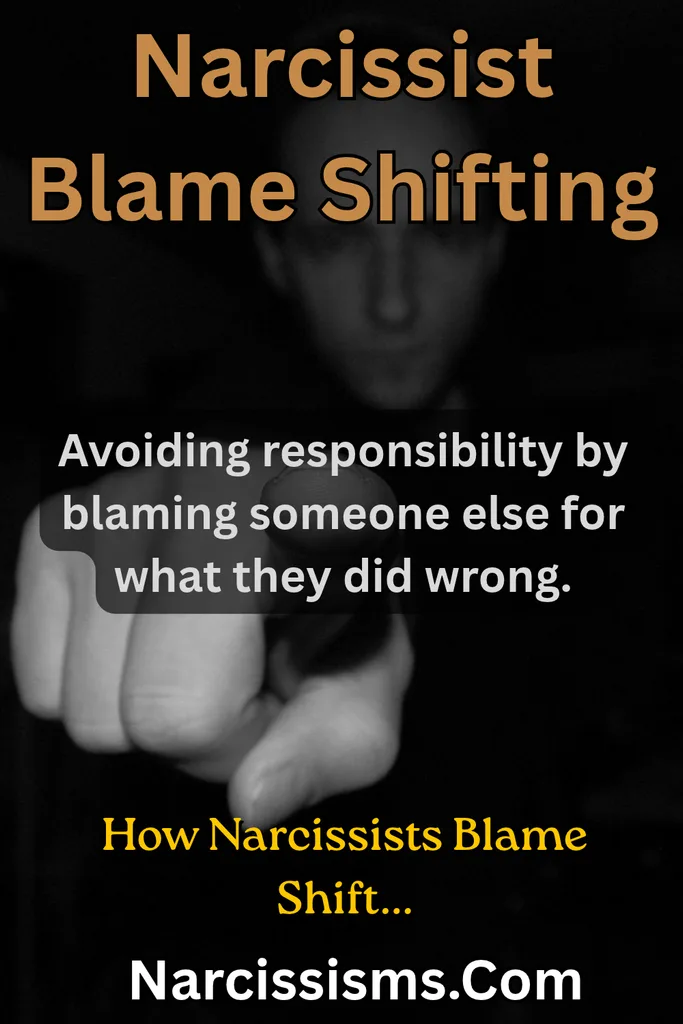
Blame shifting is a manipulation tactic where someone avoids taking responsibility for their behaviour by making someone else seem responsible for the problem. In narcissistic relationships, it can leave you feeling guilty, confused and questioning whether you’ve done something wrong.
For example, if you confront a narcissist about a hurtful comment, they might accuse you of being too sensitive. Or they might bring up something you did months ago to distract from their own behaviour. So instead of addressing the original issue, the conversation becomes about your supposed faults.
Over time, this pattern can make you feel responsible for their anger, dishonesty or emotional outbursts. You might find yourself apologising just to end an argument. Even when you know you’ve been treated unfairly.
Blame shifting isn’t exclusive to narcissists, but repeated patterns of avoiding responsibility and turning accusations back on others can be a sign of an unhealthy relationship. Recognising this behaviour can help you separate genuine accountability from attempts to make you feel responsible for someone else’s actions.
Learn more: [How narcissists blame shift]
Boundaries

What Are Boundaries In Narcissistic Relationships?
Boundaries are limits you set to protect your emotional wellbeing, time, privacy and personal values. They help you decide what behaviour you will accept, what you won’t tolerate, and how you’ll respond when someone treats you disrespectfully.
Setting boundaries with a narcissist can be particularly challenging because they may react badly when they realise they can no longer control your behaviour. They might ignore your requests, accuse you of being selfish, use guilt to change your mind, or give you the silent treatment when you stand your ground.
For example, you might tell someone you won’t continue a conversation if they shout at you. A healthy response would involve respecting that limit. But someone who repeatedly violates your boundaries may escalate the argument, or blame you for walking away.
Boundaries aren’t about controlling another person’s behaviour. They’re about deciding what you will and won’t accept. You can’t force a narcissist to respect your limits. But you can take steps to protect yourself and reduce their influence over your life. In some situations, this may mean limiting contact or ending the relationship altogether.
Learn more: [How to set boundaries with narcissists]
Brain Fog
What Is Narcissistic Brain Fog?
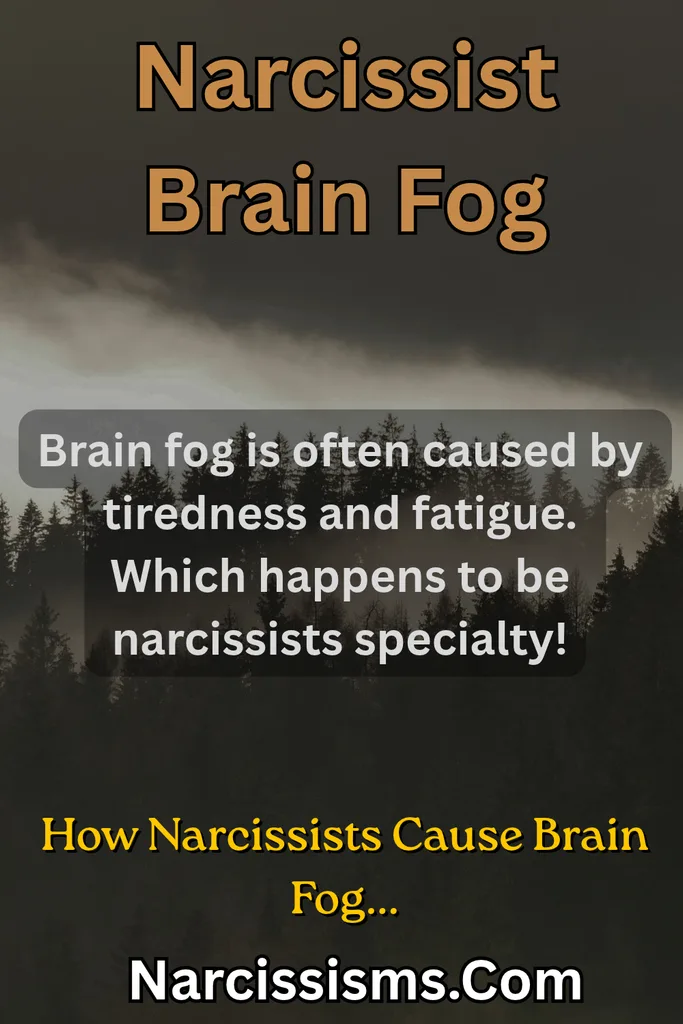
Brain fog is a feeling of mental confusion that can make it difficult to think clearly, remember things, or make decisions. After experiencing narcissistic abuse, you may find yourself struggling to organise your thoughts, second guessing your memories, or feeling like your mind isn’t working as well as it should.
Constant criticism, gaslighting, emotional manipulation and walking on eggshells can leave you mentally exhausted. When you’re continually trying to anticipate someone’s reactions, make sense of contradictory behaviour, or defend your own reality, it can become harder to concentrate and think clearly.
You may forget things, struggle to find the right words, or feel disconnected from your usual self. This can be distressing, particularly if you were previously confident in your memory and judgement.
Brain fog has many possible causes. So it isn’t necessarily a sign of narcissistic abuse. However, prolonged stress and emotional exhaustion can contribute to these symptoms.
Learn more: [How narcissists cause brain fog]
Bread Crumbing
What Is Breadcrumbing In Narcissistic Relationships?
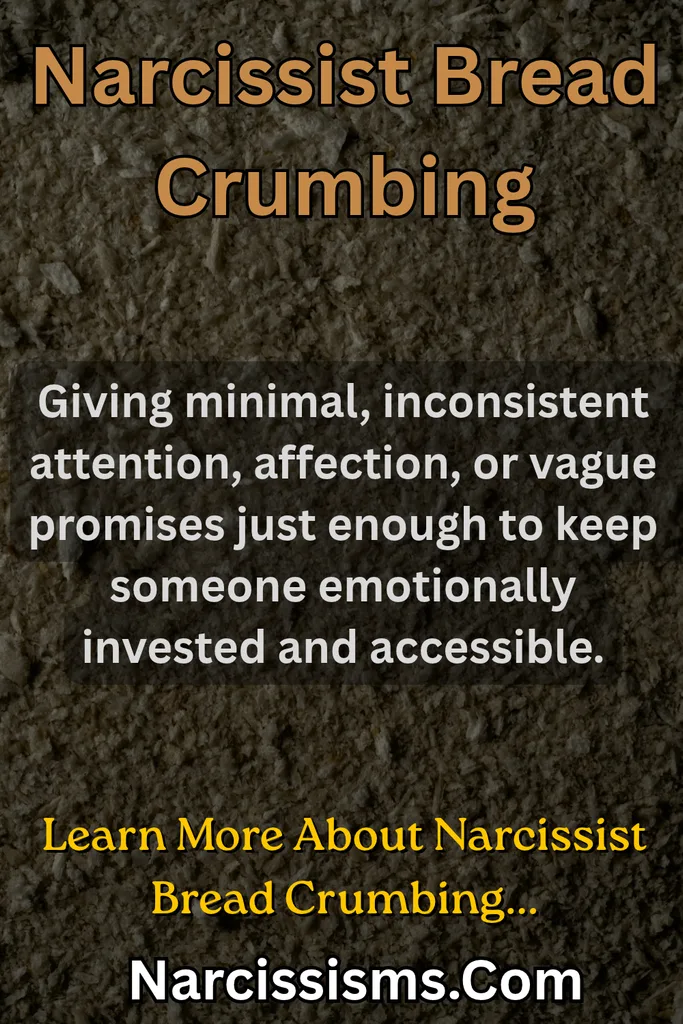
Breadcrumbing is a form of emotional manipulation where someone gives you occasional small amounts of attention, affection or reassurance without offering genuine commitment. Like leaving a trail of breadcrumbs, they give you just enough to keep you interested and hoping for more.
A narcissist may offer a brief compliment, make promises about the future, or suddenly become affectionate after a period of ignoring you. Just as you begin to believe the relationship is improving, they may withdraw again, leaving you confused and wondering what went wrong.
This unpredictable pattern of attention can keep you emotionally invested, particularly if you’re hoping to get back the loving person you thought you knew. You may find yourself waiting for the next message or gesture, convincing yourself that things will eventually change.
Breadcrumbing isn’t exclusive to narcissists, but it can be particularly damaging when combined with other manipulative behaviours. Recognising the pattern can help you stop chasing occasional scraps of affection and start looking at whether someone’s actions consistently meet your needs.
Learn more: [Narcissist Bread Crumbing]
Cognitive Dissonance
What Is Cognitive Dissonance In Narcissistic Relationships?
Cognitive dissonance is the mental discomfort you experience when two conflicting beliefs, feelings or experiences clash. In narcissistic relationships, it often occurs when the person you love behaves in ways that contradict the person you believe them to be.
For example, you might remember a narcissist being loving, charming and attentive at the beginning of the relationship. Yet now find yourself dealing with criticism, manipulation or emotional cruelty. You struggle to reconcile these two very different versions of the same person.
You may tell yourself that they really do love you, that their hurtful behaviour is your fault, or that things will return to how they used to be. You might minimise their actions or make excuses for them, because accepting the full reality of the relationship feels too painful.
This internal conflict can leave you feeling confused, anxious, and unable to trust your own judgement. You may find yourself repeatedly questioning what happened and searching for an explanation that makes everything fit together.
Recognising cognitive dissonance can help you understand why it’s so difficult to accept painful truths about someone you care about. Gradually learning to acknowledge both the good and bad aspects of your experiences can help you see the relationship more clearly, and rebuild trust in yourself.
Learn more: [How Narcissists Cause Cognitive Dissonance]
Communal Narcissists
What Is A Communal Narcissist?
A communal narcissist is someone who seeks admiration and validation by presenting themselves as exceptionally caring, generous, or morally superior. Rather than trying to impress others through wealth, power or personal achievements, they build their image on being a good person who does more for others than anyone else.
A communal narcissist might volunteer for charitable causes, offer help to people in need, or become heavily involved in their community. These activities aren’t necessarily insincere, but the narcissistic traits may become apparent when they don’t receive the recognition or appreciation they believe they deserve.
For example, they might remind others of everything they’ve done for them, become resentful when someone else receives praise, or portray themselves as the only person who truly cares. Their generosity may come with unspoken expectations of gratitude, loyalty or admiration.
Communal narcissism can be difficult to recognise because the person may have a reputation for being kind and selfless. However, behind this public image, their behaviour may reveal a strong need for approval. Plus a tendency to use their apparent goodness to maintain a sense of superiority.
Learn more: [Communal Narcissist Traits]
Covert Narcissists

What Is A Covert Narcissist?
A covert narcissist is someone who displays narcissistic traits in a less obvious way than the stereotypical, openly arrogant narcissist. Rather than constantly seeking attention or openly boasting about their superiority, they may appear shy, sensitive, and insecure.
However, beneath this outward appearance, they may still have a strong sense of entitlement, a need for validation and difficulty accepting criticism. Their narcissistic traits can emerge through more subtle behaviours, such as playing the victim, using guilt to influence others, giving the silent treatment or making passive aggressive comments.
Covert narcissists may also react badly when they feel ignored, overlooked or unappreciated. They might believe others fail to recognise their worth, leading to resentment, jealousy or a tendency to blame other people for their problems.
Because these behaviours can be less obvious, covert narcissism can be difficult to recognise. Particularly when the person appears caring, vulnerable or misunderstood.
Learn more: [11 Covert Narcissist Traits]
Devaluation
What Is Devaluation In Narcissistic Relationships?
Devaluation is a pattern of behaviour where someone who once treated you as special, desirable or almost perfect begins to criticise, belittle or undermine you. In narcissistic relationships, it often follows an intense period of affection and admiration, leaving you wondering what happened to the person you originally fell in love with.
During the devaluation stage, a narcissist might make frequent critical comments, withdraw affection, compare you unfavourably with others, or find fault with things they once admired about you. They may also use silent treatment, humiliation or emotional manipulation to make you feel less confident and more dependent on their approval.
This sudden change in treatment can be deeply confusing. You might start working harder to please them, believing that if you can get things right, they’ll return to the loving person they used to be.
Not every narcissistic relationship follows the same pattern, and devaluation isn’t exclusive to narcissism. However, when affection repeatedly gives way to criticism and disrespect, it’s important to recognise the impact on your wellbeing. You deserve a relationship where respect and kindness aren’t conditional on keeping someone else happy.
Learn more: [How narcissist subtly devalue you]
Double Binds
What Is A Narcissistic Double Bind?
A double bind is a no win situation where someone faces conflicting demands or expectations. So whatever they choose, they risk being criticised or blamed.
For example, a narcissist might complain that you don’t spend enough time with them, but when you do, they accuse you of being clingy. You can end up feeling that nothing you do is ever good enough.
Learn more: [How narcissists use double binds]
Echoism
What Is Echoism In Narcissistic Relationships?
Echoism is a tendency to minimise your own needs, avoid attention, and prioritise other people’s feelings over your own. While narcissism involves an excessive focus on oneself, echoism is often described as the opposite… a reluctance to take up space, ask for help, or feel comfortable receiving attention.
In narcissistic relationships, an echoist may become so focused on keeping the other person happy that they gradually lose touch with their own wants and needs. They might avoid expressing disagreement, feel guilty about saying no, or worry that standing up for themselves will make them seem selfish or demanding.
These patterns can develop in people who have grown accustomed to criticism, emotional manipulation or unpredictable reactions from others. Over time, they may learn that staying quiet and putting everyone else first feels safer than expressing their true feelings.
Echoism isn’t a formal mental health diagnosis, and being considerate or modest doesn’t automatically make someone an echoist. However, recognising these tendencies can be an important step towards rebuilding self esteem, setting healthier boundaries and learning that your needs matter just as much as anyone else’s.
Learn more: [How echoism can turn you into a narcissist magnet]
Gaslighting
What Is Gaslighting In Narcissistic Relationships?
Gaslighting is a form of psychological manipulation that causes someone to question their own memories, perceptions, or understanding of events. In narcissistic relationships, it can be used to avoid responsibility, maintain control, or make you doubt your own judgement.
For example, a narcissist might deny saying something hurtful, even when you clearly remember the conversation. They may insist you’re imagining things, accuse you of being too sensitive, or tell you that you’re making a big deal out of nothing. Over time, these repeated denials and accusations can leave you wondering whether your memories and feelings can be trusted.
Gaslighting can be particularly damaging because it gradually undermines your confidence in your own reality. You might start relying on the other person’s version of events, apologising for things you haven’t done, or constantly second guessing yourself.
Learn more: [13 narcissist gaslighting phrases]
Hoovering
What Is Hoovering In Narcissistic Relationships?
Hoovering is a manipulation tactic where someone attempts to draw you back into a relationship after a period of separation, conflict or no contact. The term comes from the Hoover vacuum cleaner, reflecting how someone may try to suck you back into their life.
A narcissist might suddenly become affectionate, send emotional messages, make grand promises, or claim they’ve finally changed. They may remind you of the good times, say they can’t live without you, or use guilt to make you feel responsible for their unhappiness.
Hoovering often happens when someone senses they’re losing access to your attention, affection or support. Just as you’re beginning to move on, their renewed interest can stir up hope that the relationship might finally become what you wanted it to be.
Recognising hoovering can help you protect your boundaries and make decisions based on someone’s consistent actions, rather than the emotions stirred up by their sudden return.
Learn more: [Narcissist hoovering tactics]
Mirroring
What Is Mirroring In Narcissistic Relationships?
Mirroring is a behaviour where someone copies another person’s interests, opinions, mannerisms, values or preferences to create a sense of similarity and connection. In narcissistic relationships, mirroring can sometimes be used to make someone feel they’ve finally met a person who truly understands them.
During the early stages of a relationship, a narcissist might suddenly share all your favourite hobbies, agree with your opinions, enjoy the same music, or claim to have exactly the same dreams for the future. This can make the connection feel unusually intense, as though you’ve found your perfect match.
Mirroring isn’t always manipulative. People naturally adopt aspects of one another’s behaviour when they like someone, and genuine compatibility does exist. However, when mirroring is part of a broader pattern of deception, it may help someone gain your trust and affection before revealing a very different side of their personality.
You may eventually notice that their supposed interests and values change, or that the person you fell for seems to have disappeared. Recognising this pattern can help you take your time building trust and pay attention to whether someone’s behaviour remains consistent throughout the relationship.
Learn more: [Why narcissist mirror you]
Projection
What Is Projection In Narcissistic Relationships?
Projection is a psychological defence mechanism where someone attributes their own unwanted feelings, behaviours or characteristics to another person. In narcissistic relationships, it can be used to avoid taking responsibility for wrongdoing, and shift attention to someone else.
For example, a narcissist who lies or cheats might accuse their partner of being dishonest or unfaithful. Someone who behaves selfishly might repeatedly accuse others of only thinking about themselves. By turning the accusation around, they put the other person on the defensive rather than addressing their own behaviour.
Projection can leave you feeling confused, frustrated and constantly trying to prove your innocence. You might find yourself defending your character against accusations that seem to have more to do with the other person’s actions than your own.
Learn more: [What narcissists project on to others]
4 thoughts on “Narcissism Explained: Understanding Narcissistic Behaviours And Tactics”